On-site treatment of infectious healthcare waste: UMC Utrecht's experience
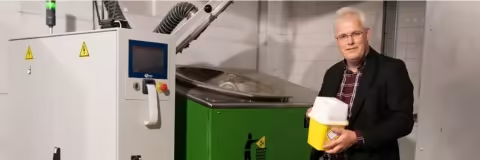
How one of the Netherlands' leading university medical centres integrated a Sterilwave 250 solution to rethink the management of its infectious healthcare waste, with support from SimpleComply.
The management of infectious healthcare waste is a major challenge for healthcare facilities. Faced with high collection and treatment costs, reliance on external service providers and increasingly ambitious environmental targets, hospitals are looking for new solutions to optimise waste management.
In the Netherlands, UMC Utrecht chose to explore an alternative to incineration by evaluating different on-site treatment technologies. In 2020, following a comparative study of several solutions, this university medical centre launched a pilot project with a Sterilwave 250, with support from SimpleComply, Sterilwave's distributor in the Netherlands.
Several years after its installation, this project provides practical feedback on the benefits, operational constraints and opportunities offered by treating infectious healthcare waste directly within a hospital.
UMC Utrecht: rethinking hospital healthcare waste management
Before the project began, UMC Utrecht generated approximately 200 tonnes of infectious healthcare waste (SZA) per year. This included, in particular, sharps, laboratory waste, dressings and other contaminated waste.
This waste was placed in plastic drums, then collected and transported to external facilities for incineration.
Two main considerations led the hospital to seek an alternative: cost control and reducing its environmental impact.
Indeed, infectious healthcare waste is one of the most expensive waste streams for Dutch hospitals to manage. Dependence on collection and treatment providers, combined with rising prices, is encouraging healthcare facilities to explore alternative approaches.
Environmental considerations are also important. Like many healthcare facilities in the Netherlands, UMC Utrecht is committed to a sustainability approach linked to the Green Deal and its targets for 2030.
On-site treatment therefore emerged as an option worth exploring to reduce dependence on traditional waste management routes and gain greater control over hospital waste management.
Why choose on-site healthcare waste treatment?
Treating waste directly at the point of generation offers several benefits for healthcare facilities.
By integrating a treatment solution into their infrastructure, hospitals can, in particular:
- Reduce waste volume through an integrated shredding stage.
- Reduce the need to collect and transport treated waste.
- Gain greater autonomy in managing their infectious healthcare waste.
- Exercise better control over the associated management costs.
- Explore new opportunities for material separation and recovery after treatment.
For UMC Utrecht, these opportunities addressed both the hospital's financial challenges and its environmental ambitions.
Sterilwave 250: a technology selected after evaluating several solutions
Before making its decision, UMC Utrecht assessed several suppliers and technologies.
The selection process was based on various criteria essential in a hospital environment:
- The microbiological performance of the treatment process.
- Integration into existing workflows.
- Operator safety.
- Process traceability.
- The quality and characteristics of the materials obtained after treatment.
- Opportunities for material recovery and the development of a circular approach.
Sterilwave technology attracted the hospital's attention because it combines shredding and microwave treatment in a single piece of equipment designed for direct on-site installation.
However, the technology itself was not the only deciding factor in the final choice.
The support provided by SimpleComply also played an important role. Its expertise in the healthcare sector, knowledge of waste management and ability to develop a comprehensive business case helped reassure the hospital.
Reference site visits also enabled UMC Utrecht to gain a better understanding of the solution and how it operates before making its decision.
The hospital ultimately selected the Sterilwave 250 for its pilot project.
SimpleComply: support from the initial assessment through to commissioning
Founded by two partners with complementary skill sets, SimpleComply draws on a combined experience of more than 30 years supporting healthcare facilities.
Initially specialising in accreditation, IT and compliance consultancy, the company gradually expanded its activities to meet its clients' needs across various areas of hospital management, including healthcare waste management.
Today, SimpleComply combines consultancy, selected technologies, implementation and after-sales support. Sterilwave is currently the only equipment brand in its portfolio, alongside its consultancy activities.
As part of the UMC Utrecht project, SimpleComply acted as consultant, project manager and coordinator between the hospital and the technology supplier.
Its involvement covered several stages:
1. Needs assessment and business case development
Assessment of the hospital's waste streams, definition of the project objectives and analysis of the expected financial and environmental benefits.
2. Solution assessment and site preparation
Assessment of how well the technology matched the hospital's operational needs and the technical constraints associated with installation.
3. Obtaining permits and stakeholder consultation
Support with the procedures relating to the environmental permit and coordination of discussions with biosafety and occupational health representatives. Discussions focused in particular on microwave technology and safe operating conditions.
4. Pilot project coordination
Monitoring of the pilot phase, coordination between the various stakeholders and assessment of how well the solution integrated into the hospital environment.
5. Installation, commissioning and training
Coordination of the installation, support during commissioning and operator training.
According to UMC Utrecht, SimpleComply's thorough preparation, planning and expertise helped avoid major difficulties and significant unforeseen issues during implementation.
Waste volume reduction: an initial operational benefit
One of the benefits identified by UMC Utrecht is the reduction in waste volume following shredding.
This reduction means fewer containers are required for waste management and, consequently, less need for transport and waste removal.
The hospital confirms that this reduction remains representative of its current experience. It nevertheless identifies further opportunities to reduce the number of plastic containers used.
How is Sterilwave being used today?
When the project was launched, the initial objective was to treat between 60 and 70 tonnes of infectious healthcare waste per year, representing approximately 30% of the hospital's total waste volume at the time.
Today, the Sterilwave 250 is used primarily to treat laboratory waste. The equipment normally operates on a daily basis.
Extending treatment to other hospital departments and waste streams is still under consideration.
This development illustrates the importance of sizing a treatment solution according to the waste streams actually identified and the operational needs of each healthcare facility.
Towards new opportunities for material recovery
Beyond treating infectious healthcare waste, UMC Utrecht has also explored opportunities to recover materials after treatment.
An initial trial aimed to use the materials obtained after shredding and treatment as a substitute for sawdust in the cement industry.
However, this route did not prove successful, particularly because the treated waste stream contained too many sharps.
The hospital and SimpleComply are nevertheless continuing to explore new material recovery opportunities.
A project is currently under consideration to identify and separate certain components with potential for recovery after Sterilwave treatment.
This approach reflects the growing interest among healthcare facilities in more circular waste management, going beyond treatment alone.
Several years of operation: training, maintenance and feedback
After several years of use, UMC Utrecht has gained valuable experience of integrating the Sterilwave 250 into its day-to-day operations.
Three operators have been trained to use the equipment.
According to the hospital, one full day of training is generally sufficient to acquire the basic knowledge required to operate the system. However, a second day is recommended to prepare operators for more specific and less common situations.
Daily operation also involves certain operational constraints.
UMC Utrecht reports having experienced more operating interruptions than initially expected. These technical incidents have sometimes affected equipment availability.
The hospital has also identified several areas for improvement regarding component accessibility for technicians, the ease of maintenance operations and the time required to clean the equipment after each treatment cycle.
These observations are a reminder that an on-site treatment project must take into account not only the technical performance of the equipment, but also actual operating conditions, maintenance requirements and operator workload.
Nevertheless, the hospital highlights the quality and responsiveness of the technical support provided by Sterilwave and SimpleComply, which it has regularly called upon.
Would UMC Utrecht choose Sterilwave again?
Despite the operational difficulties encountered, UMC Utrecht remains broadly satisfied with its experience and the benefits of on-site treatment.
When asked whether it would choose this technology again today, the hospital says it probably would.
The main reasons remain the benefits of on-site treatment and its contribution to the hospital's strategic objectives for reducing CO₂ emissions.
UMC Utrecht does, however, point out that equipment reliability and operator workload would remain important considerations in any new investment decision.
The hospital has also shared its experience with other hospitals at their request, while wishing to maintain an objective and independent position as a university medical centre.
Three recommendations for hospitals considering on-site treatment
Drawing on its experience, UMC Utrecht has identified three key points that every healthcare facility should consider before embarking on an on-site infectious healthcare waste treatment project.
1. Carefully analyse waste volumes and composition
It is essential to have a thorough understanding of the waste streams generated by the facility in order to identify which ones can be treated and determine the required treatment capacity.
2. Build a financial and environmental business case
The investment must be assessed by taking into account the expected financial and environmental benefits, as well as operating costs and operational constraints.
3. Anticipate implementation and operating requirements
Project feasibility also depends on numerous factors: site characteristics, required permits, stakeholder buy-in, operator training and the organisation of day-to-day work.
For UMC Utrecht, support from an experienced partner is also an asset when preparing and successfully delivering this type of project.
Sterilwave: a comprehensive approach to hospital waste management
The project carried out with UMC Utrecht demonstrates that integrating an on-site infectious healthcare waste treatment solution involves much more than simply installing a piece of equipment.
Waste stream analysis, business case development, site preparation, permits, training and technical support are all essential stages in ensuring a project's success.
Since the pilot project was launched in 2020, Sterilwave and its distributor SimpleComply have been supporting UMC Utrecht in this evolution of its hospital waste management practices.
Would you like to carry out the same assessment for your healthcare facility?
On the same subject

Technology
